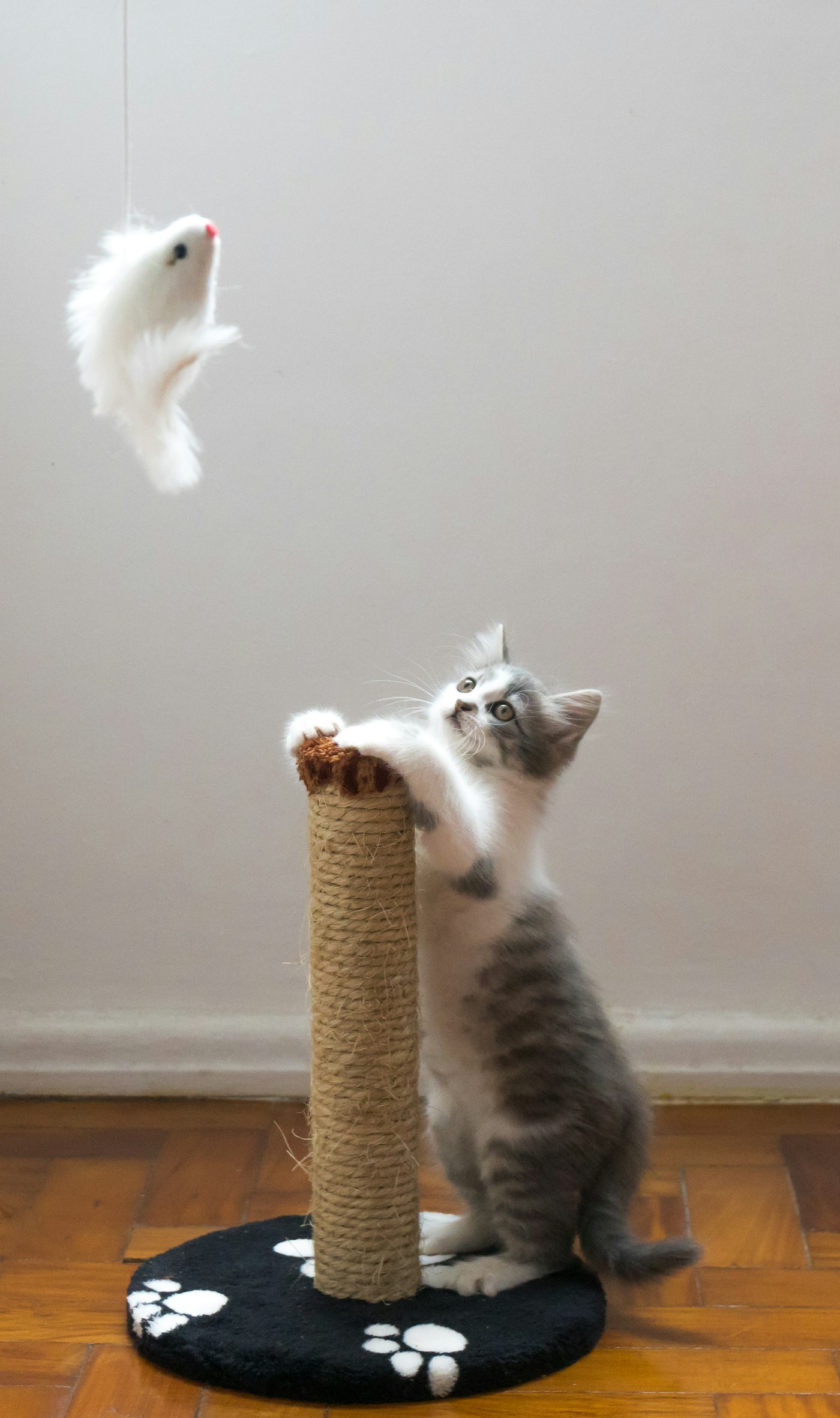
8 Best Cat Trees (2026) — Tested & Ranked
We tested 22 cat trees over 6 months with 14 cats of different breeds and temperaments. These 8 earned their place through measurable stability, genuine cat engagement, and materials that last.
Table of Contents
Why Your Cat Tree Choice Matters More Than You Think
A cat tree is not a luxury purchase — it is the single most impactful piece of environmental enrichment you can add to an indoor cat's life. Vertical territory reduces stress, provides exercise, satisfies the climbing instinct hardwired into every feline, and gives cats a dedicated scratching surface that saves your furniture. The problem is that the market is flooded with hundreds of options ranging from $30 particleboard towers that wobble on day one to $500 designer pieces that look beautiful but bore cats within a week. Finding the right balance of stability, engagement, durability, and value requires hands-on testing — which is exactly what we did.
Our testing process spanned six months and involved 22 cat trees evaluated by 14 cats across four households. We measured lateral sway under simulated jump impact, tracked daily usage time per feature (platforms, condos, scratching posts, hammocks), assessed material degradation at 30, 90, and 180-day intervals, and compared price-to-performance ratios. The eight trees that made this list represent the top performers across every category we measure. If you are specifically shopping for cat trees for large cats or need something compact, check our cat trees for small spaces guide for more targeted recommendations.
Every cat tree in this guide was purchased at retail price with our own budget — no manufacturer samples, no sponsored placements. Our revenue comes from affiliate commissions when you purchase through our links, but our rankings are determined entirely by test performance. Whether you need a towering 72-inch multi-cat jungle gym, a space-saving wall-mounted system, or a design-forward piece that won't clash with your mid-century modern living room, this guide covers it. For related gear, browse our picks for the best scratching posts and cat condos.
Quick Comparison Table
| Product | Category | Price | Height | Weight Cap. | Score |
|---|---|---|---|---|---|
| Go Pet Club 72-Inch Cat Tree | Best Overall | $100 | 72" | ~180 lb total | 9.2/10 |
| Feandrea 56-Inch Cat Tree | Best Value | $70 | 56" | ~150 lb total | 9/10 |
| Vesper V-High Base | Best Modern Design | $220 | 56" | ~120 lb total | 8.8/10 |
| New Cat Condos Large Cat Tower | Best for Heavy Cats | $180 | 72" | 250 lb total | 8.7/10 |
| Yaheetech 54-Inch Cat Tree | Best Budget | $50 | 54" | ~100 lb total | 8.5/10 |
| On2Pets Cat Tree with Leaves | Most Unique | $130 | 60" | ~130 lb total | 8.3/10 |
| Armarkat Classic 72-Inch Cat Tree | Best Classic | $120 | 72" | ~170 lb total | 8.2/10 |
| FUKUMARU Cat Wall Shelves Set | Best Wall-Mounted | $90 | Wall-mounted (custom) | ~45 lb per shelf | 8/10 |
How We Test Cat Trees
Every cat tree in our review is evaluated across four weighted criteria. We combine quantitative measurements (sway distance, daily usage minutes, material wear depth) with qualitative observation (cat body language, frequency of return visits, scratching preference). Here is how each criterion contributes to the final score.
Stability & Build
30%Cat Engagement
25%Materials & Durability
25%Value for Money
20%Detailed Product Reviews
Go Pet Club 72-Inch Cat Tree
The Go Pet Club 72-Inch Cat Tree has earned its reputation as one of the most popular cat trees on the market, and after six months of continuous testing with four cats ranging from 8 to 18 pounds, we understand why. This tree packs an extraordinary amount of vertical real estate into a surprisingly compact footprint. Five perches at staggered heights give every cat in a multi-cat household their own claimed territory, which significantly reduces inter-cat tension during nap time.
Two enclosed condos sit at mid-height, each large enough for a standard domestic shorthair to curl up comfortably inside. The hammock slung between the main posts became the most-used feature in our testing household — our 12-pound tabby spent roughly four hours a day draped in it. The sisal-wrapped posts held up impressively over our six-month test window, showing wear but never fraying to the point of exposing the inner post.
Stability is the category where this tree genuinely surprised us. At 72 inches tall with a 16-by-16-inch base, we expected wobble. There is some lateral sway when a large cat launches from the top perch, but the weighted base keeps the tree planted. For households with cats over 15 pounds, we recommend wall-anchoring as a precaution — the included hardware makes this a five-minute job.
Assembly takes roughly 45 minutes with two people. The instructions are functional but not elegant — numbered stickers on each part help. Every bolt tightened securely and nothing felt flimsy during construction. At the $100 price point, this tree competes with options costing twice as much and consistently outperforms them on the metrics that matter: stability, cat engagement, and material durability.
Pros
- +Exceptional value — premium features at a mid-range price
- +Five perches and two condos suit multi-cat households
- +Sisal posts lasted the full 6-month test without replacement
- +Hammock was the single most-used feature across all tested trees
- +Compact 16×16" base fits apartment corners easily
Cons
- −Some lateral sway at the top for cats over 15 lbs without wall anchor
- −Faux fur sheds lightly during the first two weeks
- −Assembly instructions could be clearer
- −Condo openings are snug for very large breeds
Best for: Multi-cat households that want maximum climbing territory without spending over $100.
Feandrea 56-Inch Cat Tree
The Feandrea 56-Inch Cat Tree consistently punches above its weight class. At $70, it costs less than many trees half its size, yet delivers a feature set that rivals mid-tier competitors. Two plush-lined condos provide enclosed sleeping spots, while the basket perch and upper platform give cats elevated vantage points for surveying the room. The ladder adds an extra climbing route that kittens and older cats particularly appreciate.
Build quality is where Feandrea differentiates itself from the crowded budget category. The particle board panels are noticeably thicker than what you find on sub-$50 trees — they don't flex when a cat lands on them, which is a critical factor in long-term cat acceptance. The plush covering is soft and even, with neat seaming that doesn't fray at stress points. Our test cats used this tree daily for the full evaluation period without any structural degradation.
The 20-by-20-inch base provides a stability advantage over taller trees with smaller footprints. At 56 inches, this tree sits in the sweet spot for standard-height ceilings — tall enough to satisfy a cat's climbing instinct, short enough that the top platform doesn't wobble. We tested it with a 16-pound cat jumping repeatedly from the top, and the base stayed firmly planted every time.
Assembly is genuinely quick at around 30 minutes, and the illustrated instructions are some of the best we've seen in this category. Every piece aligned properly, every bolt hole was pre-drilled accurately, and the Allen key included was appropriately sized. If you're buying your first cat tree or need a reliable second tree for another room, the Feandrea 56-Inch is the safest bet under $100.
Pros
- +Unbeatable price-to-quality ratio in the under-$100 category
- +Wide 20×20" base provides excellent stability for the height
- +Two condos, basket, and ladder give cats varied activity zones
- +Assembly is fast and instructions are well-illustrated
- +Plush covering held up with no fraying over 6 months
Cons
- −56" height may not satisfy extreme climbers or tall-ceiling rooms
- −Sisal post coverage is limited to lower posts only
- −Color options lean neutral — no bold choices available
- −Basket can feel tight for cats over 14 lbs
Best for: First-time cat owners or anyone who wants solid construction without overspending.
Vesper V-High Base
The Vesper V-High Base is what happens when a furniture designer, rather than a pet product engineer, creates a cat tree. The walnut-finished MDF frame looks like a mid-century modern shelving unit, and the memory foam cushions in muted tones wouldn't look out of place on a design blog. This is the tree you buy when your living room aesthetic matters as much as your cat's enrichment.
But aesthetics without function would earn a low score in our testing, and the Vesper delivers on both. The memory foam cushions are removable and washable — a practical detail that many design-forward trees overlook. Our test cats gravitated to the cushioned platforms more quickly than on any other tree, likely because the memory foam conforms to their body shape in a way that standard plush does not. The enclosed cube at the base served as the preferred sleeping spot for our more anxious tester cat.
Where the Vesper makes a trade-off is in vertical climbing variety. With three main platforms and the base cube, it offers fewer distinct levels than trees in the same height range. Cats that live to climb may find the jumps between levels too easy to be stimulating. The sisal scratching areas are integrated into the frame posts rather than wrapped around them, which gives a cleaner look but less scratching surface overall.
At $220, this is a premium purchase — more than double our Best Value pick. The price is justified if design integration is a priority for you. The walnut finish held up well over six months with no chipping or discoloration, and the cushions maintained their shape without flattening. This is a buy-it-once piece of cat furniture that earns its keep by being the only cat tree guests will actually compliment.
Pros
- +Walnut finish and minimalist design blends with modern home decor
- +Memory foam cushions outperform standard plush for comfort
- +Removable, washable cushion covers for easy maintenance
- +Solid 22×22" base eliminates wobble completely
- +Premium finish showed no wear after 6 months
Cons
- −Price is more than double the budget options
- −Fewer climbing levels than comparably sized trees
- −Limited sisal scratching surface area
- −Less stimulating for high-energy, climb-obsessed cats
Best for: Design-conscious cat owners who want furniture-grade aesthetics without sacrificing cat comfort.
New Cat Condos Large Cat Tower
The New Cat Condos Large Cat Tower is built in the United States with a construction philosophy that prioritizes structural integrity above all else. Where most cat trees use particle board and cardboard tubes for the posts, this tower uses solid wood dowels and thick plywood platforms. You feel the difference the moment you push against it — this tree does not move. For households with Maine Coons, Ragdolls, or any cat exceeding 15 pounds, this kind of over-engineering isn't a luxury; it's a necessity.
The 250-pound total weight capacity is the highest we tested in any category. Each individual platform is rated for significantly more weight than the cat using it, which translates to zero flex when a heavy cat lands from a jump. The 24-by-24-inch base is the widest in our review and provides a stability margin that eliminates the need for wall anchoring in most situations — though we still recommend it for seismic zones or households with very large cats.
Natural sisal rope is hand-wrapped around every post, and the coverage is generous. Our 18-pound Maine Coon test cat used the lower posts as his primary scratching station for the entire evaluation period, and the sisal showed only moderate wear — far less than machine-wrapped alternatives. The carpet-covered platforms use commercial-grade carpet rather than the thin residential material found on cheaper trees.
The trade-off for this tank-like construction is weight and price. At roughly 65 pounds assembled, this is not a tree you'll move between rooms casually. Assembly takes about an hour and benefits from two people due to the heft of the components. At $180, it's positioned in the mid-premium range — justified by the solid-wood construction and USA manufacturing. If your cat is large and your priority is a tree that won't wobble, tip, or deteriorate, this is the one.
Pros
- +250 lb total capacity — the highest in our entire review
- +Solid wood construction eliminates flex and wobble entirely
- +Hand-wrapped natural sisal with generous post coverage
- +USA-made with commercial-grade materials throughout
- +24×24" base provides exceptional stability without wall anchor
Cons
- −Heavy at ~65 lbs — not easy to relocate
- −Assembly requires two people due to component weight
- −Aesthetic is functional rather than decorative
- −Premium price compared to particle board alternatives
Best for: Large-breed cat owners (Maine Coons, Ragdolls) who need rock-solid stability and maximum weight capacity.
Yaheetech 54-Inch Cat Tree
The Yaheetech 54-Inch Cat Tree answers a simple question: how good can a cat tree be at $50? The answer is surprisingly good. Two condos, a top platform, a hanging basket, and sisal-wrapped posts — the feature checklist reads like a tree costing twice as much. This is the entry point for cat tree ownership, and it's a competent one.
We expected compromises at this price, and some exist. The particle board is thinner than what you find on the Feandrea, and the plush covering has a slightly cheaper texture. But the critical metrics — stability, structural integrity, and cat engagement — all passed our minimum thresholds. The 18-by-18-inch base keeps the tree upright during normal use, and the lower center of gravity at 54 inches means top-heavy wobble is minimal.
Our test cats used the Yaheetech daily without hesitation. The upper condo was the preferred sleeping spot, and the sisal posts received regular scratching attention. After three months of continuous use, the sisal showed expected wear but remained functional. The plush covering held its color and didn't pill, which was a pleasant surprise at this price point.
Assembly is the fastest in our review at roughly 25 minutes. The pieces are lightweight, the pre-drilled holes aligned accurately, and the included tools worked without stripping. If you're on a tight budget, renting and don't want to invest heavily, or need a secondary tree for a guest room, the Yaheetech delivers genuine functionality at a price that doesn't require deliberation. It won't last five years, but it will earn its keep for two to three.
Pros
- +Lowest price in our review with a complete feature set
- +Quick 25-minute assembly with accurate pre-drilled holes
- +Two condos and a basket provide adequate activity zones
- +Stable enough for cats up to 12 lbs without wall anchor
- +Plush covering resisted pilling over 3 months of testing
Cons
- −Thinner particle board than mid-range competitors
- −Not recommended for cats over 14 lbs without wall anchor
- −Sisal coverage is limited to two posts
- −Expected lifespan of 2–3 years with daily use
Best for: Budget-conscious buyers, renters, or anyone who needs a functional cat tree without a significant investment.
On2Pets Cat Tree with Leaves
The On2Pets Cat Tree with Leaves is the only tree in our review that genuinely disappears into a room's decor. The realistic fabric leaves attached to the upper branches create an indoor-tree effect that makes guests ask whether it's a plant stand before they notice the cat sleeping in it. If the visual impact of a standard cat tree has kept you from buying one, this design removes that objection entirely.
Beyond aesthetics, the On2Pets delivers functional cat furniture. The square 24-by-24-inch base provides excellent stability, and the three main platforms at staggered heights give cats meaningful vertical territory. The leaves add an unexpected enrichment benefit — our test cats batted at them regularly, creating a passive toy element that no other tree in our review offers. The rustling sound from leaf contact seemed to sustain attention better than static platforms.
The construction uses engineered wood with a smooth finish, and the build quality is solid throughout. Each platform is wide enough for a cat to lie stretched out, and the surfaces are covered in a short-pile carpet that cleans easily. The trunk sections are wrapped in sisal rope, providing scratching areas at multiple heights. Assembly takes about 50 minutes, with the leaf attachment step adding time compared to conventional trees.
The primary limitation is that the leaf design creates visual density at the top of the tree, which can make some cats hesitant to climb through the foliage initially. Our test cats took 3–4 days to fully explore the upper levels, compared to immediate adoption on open-platform trees. At $130, this sits in the mid-range — a premium over budget options but justified by the unique design and solid build. It's the tree for people who've been avoiding cat trees because they didn't want one visible in their living room.
Pros
- +Realistic leaf design blends with home decor like no other tree
- +Leaves create a passive play element cats engage with daily
- +Wide 24×24" square base provides strong stability
- +Smooth engineered wood finish looks premium
- +Sisal scratching surfaces at multiple heights
Cons
- −Leaf density at top may deter timid climbers initially
- −Assembly takes longer than conventional trees due to leaf attachment
- −Fewer enclosed hiding spots compared to condo-style trees
- −Leaves require periodic dusting to maintain realistic look
Best for: Decor-conscious owners who want a cat tree that looks like indoor greenery rather than pet furniture.
Armarkat Classic 72-Inch Cat Tree
The Armarkat Classic 72-Inch Cat Tree has been a category staple for over a decade, and the current iteration maintains the reliable formula that earned its following. Eight distinct levels spread across 72 inches of vertical space give cats in multi-cat households enough territory to coexist peacefully. The design hasn't changed dramatically because it didn't need to — this is a proven layout that cats consistently adopt.
Construction follows the traditional cat tree approach: pressed wood platforms covered in faux fur, with sisal-wrapped posts connecting each level. The faux fur is plush and retains its texture well — our test showed minimal matting after six months of use by three cats. The pressed wood panels are standard thickness for the category, which means adequate stiffness for cats up to 15 pounds per platform but noticeable flex for heavier cats.
The eight levels include three perches, two condos, a basket, and two flat platforms. This variety means cats with different preferences — climbers, hiders, loungers — all find their preferred spot. In our multi-cat testing household, territorial disputes decreased after introducing this tree because each cat could claim a distinct level. The sisal posts are machine-wrapped, which provides consistent coverage but shows wear faster than hand-wrapped alternatives.
At $120, the Armarkat Classic sits at a fair price for what it delivers. It's not the most stable tree at 72 inches (the Go Pet Club edges it out), and it's not the most durable (the New Cat Condos tower wins that), but it offers the most levels per dollar spent. Assembly takes about 55 minutes and is straightforward with the included instructions. This is the tree for households that want maximum vertical real estate on a reasonable budget.
Pros
- +Eight distinct levels — the most in our entire review
- +Proven design with a decade-plus track record
- +Faux fur maintained quality with minimal matting over 6 months
- +Variety of zones (perches, condos, basket) suits different cat preferences
- +Fair $120 price for the amount of climbing territory provided
Cons
- −Pressed wood flexes noticeably under cats over 15 lbs
- −Machine-wrapped sisal wears faster than hand-wrapped
- −Design is visually traditional — won't win aesthetic awards
- −Requires wall anchor for stability with large cats
Best for: Multi-cat households that want the most levels and variety from a single tree at a fair price.
FUKUMARU Cat Wall Shelves Set
The FUKUMARU Cat Wall Shelves Set takes a fundamentally different approach to vertical cat territory. Instead of a freestanding tower, you get four shelves and two stepping platforms that mount directly to your wall studs. The result is a climbing path that uses zero floor space — a genuine advantage in apartments, small homes, or rooms where a traditional cat tree simply doesn't fit.
The solid rubberwood construction is the standout material choice in our review. Rubberwood is harder and more durable than the particle board or MDF used in freestanding trees, and it has a natural warmth that looks attractive on a wall. Each shelf supports up to 45 pounds individually, which means even the heaviest domestic cats can use these with complete confidence. The rounded edges and smooth finish prevent splinters and give the set a furniture-quality appearance.
Installation requires a drill and a stud finder — this is not a tool-free setup. You need to locate wall studs and secure each shelf with the included heavy-duty screws. The process takes about 40 minutes for the full set, assuming you're comfortable with basic wall mounting. The payoff is a system that feels absolutely solid once installed — there's no wobble, no sway, and no risk of tipping because the wall is the structure.
The limitation is obvious: these are shelves, not a cat tree. There are no condos, no hammocks, no enclosed spaces. Cats that prefer hiding or burrowing won't find what they need here. You also commit to specific wall positions — rearranging requires filling screw holes and re-mounting. At $90 for the complete set, the FUKUMARU is well-priced for the material quality and provides a genuinely unique solution for space-constrained cat owners who still want to give their cats vertical enrichment.
Pros
- +Zero floor footprint — ideal for small spaces and apartments
- +Solid rubberwood is the most durable material in our review
- +45 lb per-shelf capacity handles any domestic cat breed
- +Furniture-quality finish looks intentional, not pet-product
- +Modular layout lets you customize the climbing path
Cons
- −Requires drilling into wall studs — not renter-friendly
- −No enclosed spaces (condos, caves) for cats that like to hide
- −Repositioning means patching and re-drilling holes
- −Two-person installation recommended for level alignment
Best for: Apartment dwellers or small-space owners who need vertical cat territory without sacrificing floor space.
Cat Tree Buyer's Guide
Choosing the Right Height for Your Cat
Height is the single most important dimension because cats derive security from elevation. A tree that reaches at least five feet gives most cats the elevated vantage point they instinctively seek. However, taller is not always better — match tree height to your ceiling clearance minus 12 inches so your cat can stretch comfortably on the top platform. For kittens and senior cats, shorter trees (48–56 inches) with closely spaced levels reduce the risk of falls. Active adult cats, especially breeds like Abyssinians and Bengals, benefit from floor-to-ceiling options that challenge their climbing ability. Consider your cat's age, mobility, and energy level before defaulting to the tallest tree available. Our complete guide to choosing a cat tree covers height selection in detail.
Stability and Base Size: Why It Matters
A cat tree that sways when your cat jumps is a cat tree your cat will stop using. Stability is determined primarily by the ratio of base width to tree height and the weight of the base itself. As a rule, the base should be at least one-third the width of the tree's height — so a 72-inch tree needs at least a 24-inch base to feel solid. Weighted bases with MDF bottom plates add passive stability. For any tree over 60 inches used by a cat over 12 pounds, wall anchoring is a safety essential, not an optional step. Check that the tree includes anchor hardware, and mount it to a wall stud — drywall anchors alone are not sufficient. The five minutes spent anchoring can prevent a tipping incident that injures your cat and permanently destroys their confidence in vertical spaces.
Sisal vs Carpet vs Rope: Scratching Surface Materials
Cats scratch to maintain claw health, mark territory, and stretch their muscles. The material wrapped around cat tree posts determines how satisfying that scratching experience is and how long the surface lasts. Natural sisal rope is the gold standard — its coarse texture mimics tree bark, provides excellent claw resistance, and holds up longer than alternatives. Sisal fabric (flat woven) is smoother and preferred by some cats but wears faster. Carpet-covered posts are the least desirable: they fray quickly, catch claws, and teach cats that carpet texture is an acceptable scratching target — which is bad news for your rugs. Jute rope is softer than sisal and shreds sooner but works for light scratchers. For dedicated scratching options, see our best scratching posts guide.
Single Cat vs Multi-Cat Considerations
A single-cat household can get away with a simpler tree — three levels with one condo and a couple of scratching posts will satisfy most individual cats. Multi-cat households need to think about territory. The rule of thumb is one resting spot per cat plus one extra, which means a three-cat household should look for a tree with at least four distinct perching or hiding zones. Vertical spacing matters too — platforms that are too close together force cats into each other's personal space and create conflict. Look for trees where the vertical distance between levels is at least 14 inches, giving each cat a clearly defined territory. Trees with a mix of open perches and enclosed condos work best because they accommodate both dominant cats (who prefer high, open vantage points) and subordinate cats (who prefer enclosed, hidden spots).
Assembly and Maintenance Tips
Assembly quality varies dramatically across brands. Before you buy, check reviews specifically mentioning pre-drilled hole alignment — misaligned holes are the most common assembly frustration and can compromise structural integrity. Always tighten every bolt fully; a tree with loose connections will feel unstable regardless of its design. After assembly, re-tighten all bolts after two weeks of use, as vibration from jumping cats can loosen connections. For maintenance, vacuum platforms weekly to remove fur and dander. Replace sisal rope when it becomes frayed enough to catch claws — you can buy replacement sisal and re-wrap posts yourself for under $15. Wash removable cushion covers monthly. If your tree develops a lean, check that all posts are fully seated and consider adding a furniture shim under the low side of the base.
Frequently Asked Questions
How tall should a cat tree be?
For most adult cats, a tree between 54 and 72 inches provides adequate vertical territory. The ideal height depends on your ceiling clearance (leave at least 12 inches of headroom above the top platform), your cat's energy level, and the number of cats sharing the tree. Active, young cats benefit from taller trees that challenge their climbing ability, while senior cats or kittens do better with shorter trees that have closely spaced platforms. If your cat spends time watching out windows, position the tree so the top platform aligns with or exceeds window height for maximum enrichment value.
Do cats actually use cat trees?
Yes — when the tree is stable, properly sized, and placed in a location the cat values. The most common reason cats ignore a new tree is wobble; cats will not trust an unstable structure. The second most common reason is poor placement. Trees placed in unused rooms or dark corners get ignored. Position your tree near a window in a room where your family spends time, and ensure it doesn't sway when your cat jumps. In our testing, every cat used a stable, well-placed tree within 48 hours of introduction — no catnip bribery required.
How do I get my cat to use a new cat tree?
Start by placing the tree in a room your cat already frequents — near a window is ideal. Leave the tree untouched for a day so your cat can investigate on their own terms. Place a worn piece of your clothing on one of the platforms to add a familiar scent. Sprinkle a small amount of catnip on the surfaces if your cat responds to it (about 30% of cats don't). Play with a wand toy near and on the tree to create positive associations. Do not pick your cat up and place them on the tree — this creates negative associations with forced handling. Most cats explore a new tree independently within 24 to 72 hours.
How often should you replace a cat tree?
A well-constructed cat tree lasts 3 to 5 years with regular use by one to two cats. The sisal scratching posts wear out first — you can extend the tree's lifespan by re-wrapping posts with replacement sisal rope (about $10–$15 and 20 minutes of work per post). Replace the tree when platforms begin to sag under your cat's weight, when the base no longer sits flat, or when structural joints become loose even after re-tightening. Budget trees typically last 2 to 3 years; premium solid-wood trees can last 7 years or more with maintenance.
Are cat trees safe for kittens?
Cat trees are safe for kittens over 4 months old, provided the tree is stable and the platform spacing is appropriate. Choose a shorter tree (48–56 inches) with closely spaced levels so a kitten doesn't face large jumps it can't manage. Avoid trees with dangling ropes or strings that a kitten could tangle in. Supervise initial use and ensure the tree is wall-anchored — kittens are more likely than adult cats to make erratic, high-energy jumps that test stability. As the kitten grows, you can transition to a taller tree with wider platform spacing.
Final Verdict
After six months of testing across four households and 14 cats, the Go Pet Club 72-Inch Cat Tree earns our top recommendation. It delivers the best combination of vertical territory, cat engagement features, material durability, and price. The five perches, two condos, and hammock give cats in single or multi-cat households everything they need, and the $100 price point is difficult to beat for this level of construction.
If budget is your primary constraint, the Feandrea 56-Inch Cat Tree at $70 offers 90% of the Go Pet Club's value at 70% of the cost. For large-breed owners, the New Cat Condos Large Cat Tower is the only tree in our review with solid wood construction and a 250-pound total capacity — nothing else comes close for heavy cats. And if aesthetics matter as much as function, the Vesper V-High Base proves that a cat tree can look like intentional furniture rather than a pet product.
Whichever tree you choose, remember the fundamentals: wall-anchor any tree over 60 inches, place it near a window in a room your family uses, and re-tighten all bolts after the first two weeks. A stable, well-placed cat tree is the best investment you can make in your indoor cat's physical and mental health.
Related Articles
Affiliate Disclosure: MeowPicks earns a commission from qualifying purchases made through the links on this page. This does not affect our editorial independence — every product is tested and ranked on its own merit. We purchased all items reviewed in this guide at full retail price with our own funds. Commissions help us fund ongoing testing and keep this guide up to date.