
How Much Should You Feed Your Cat? (By Weight & Age)
Feeding charts and portion guidelines for kittens, adults, and senior cats.
The back of the cat food bag gives you a range so wide it's nearly useless. Your cat's actual portion size depends on their weight, age, activity level, and whether you're feeding wet food, dry food, or both. This guide gives you specific numbers and a method to dial in the right amount.
Table of Contents
1. Start with Calories, Not Cups
The biggest feeding mistake cat owners make is measuring food in cups or cans without knowing how many calories those portions contain. A "cup" of one brand might be 300 calories while a cup of another brand is 450 calories. Feeding "one cup per day" of each gives wildly different results.
Every cat food lists its calorie content (kcal per cup for dry, kcal per can for wet) somewhere on the packaging — usually on the back or side in small print. This is the number that matters. Once you know how many calories your cat needs per day, you divide by the calories per serving to get the right portion size.
The formula is simple: Daily calories needed / Calories per cup (or can) = Amount to feed per day. Split that total across two meals.
2. Daily Calorie Guide by Weight
These are maintenance calories — the amount needed to maintain current weight for a healthy adult indoor cat. If your cat needs to lose weight, reduce by 10-15%. If they're underweight, increase by 10-15%. Active outdoor cats may need 25-30% more.
| Cat Weight | Indoor / Sedentary | Moderately Active | Active / Outdoor |
|---|---|---|---|
| 5 lbs (2.3 kg) | 100-125 kcal | 130-150 kcal | 155-175 kcal |
| 8 lbs (3.6 kg) | 160-200 kcal | 200-230 kcal | 240-270 kcal |
| 10 lbs (4.5 kg) | 200-250 kcal | 250-280 kcal | 300-350 kcal |
| 12 lbs (5.4 kg) | 240-280 kcal | 290-330 kcal | 350-400 kcal |
| 15 lbs (6.8 kg) | 280-330 kcal | 340-380 kcal | 400-450 kcal |
| 18 lbs (8.2 kg) | 320-380 kcal | 390-430 kcal | 450-500 kcal |
A note on large breeds: Maine Coons, Ragdolls, and other large breeds naturally weigh more. A 15-pound Maine Coon is healthy; a 15-pound domestic shorthair is likely overweight. Use your cat's ideal weight (ask your vet) rather than their current weight when calculating calories if they're over or underweight.
3. Adjusting for Age
Kittens (0-12 months): Kittens need significantly more calories per pound than adults because they're growing rapidly. Generally, kittens need 60-65 calories per pound of body weight — roughly double what an adult cat needs. Feed kitten-specific food (higher protein, higher fat, more calorie-dense) and offer 3-4 meals per day until 6 months, then 2-3 meals per day until 12 months.
Adults (1-10 years): Use the table above. The main variables are activity level and whether your cat is indoor or outdoor. Most pet cats in this range need 20-25 calories per pound per day.
Seniors (11+ years): Senior cats are a mixed bag. Some become less active and need fewer calories (reduce by 10-20%). Others lose weight as they age because their digestive systems become less efficient at absorbing nutrients — these cats may actually need more calories or a more digestible food. Weigh your senior cat monthly and adjust accordingly. If your senior cat is losing weight despite eating well, see your vet — it may indicate hyperthyroidism or kidney disease.
4. Portion Sizes: Wet vs Dry vs Mixed
Once you know your cat's daily calorie target, here's how to translate that into actual food amounts. These are approximate — always check the calorie count on your specific brand.
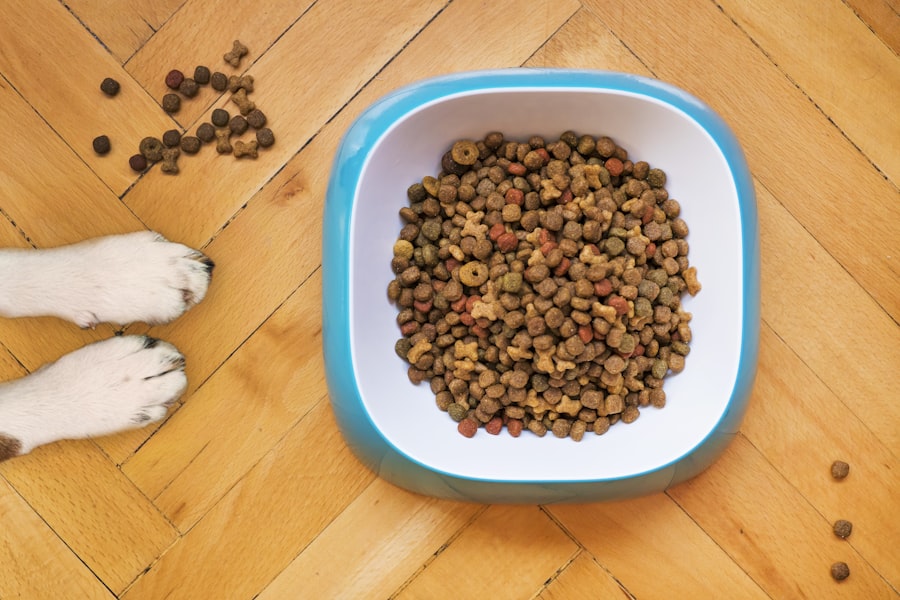
Dry food only: Most dry cat foods contain 300-400 kcal per cup. For a 10-pound indoor cat needing ~225 kcal/day, that's roughly 1/2 to 3/4 cup per day, split into two meals. Measure with a proper measuring cup or kitchen scale — a heaping "scoop" can add 25-50% more calories than you think.
Wet food only: A standard 5.5 oz can of wet food contains 150-200 kcal. A 3 oz can contains 80-110 kcal. For a 10-pound indoor cat, that's roughly 1.5 standard cans (5.5 oz) per day or about 2-2.5 small cans (3 oz) per day. Wet food is less calorie-dense than dry, which is actually an advantage for weight management — your cat gets more volume per calorie. For a full comparison, see our wet food vs dry food guide.
Mixed feeding: Many owners feed one wet meal and one dry meal. The math: calculate total daily calories, subtract the wet food calories, and make up the rest with dry food. Example for a 10-pound indoor cat (225 kcal target): one 5.5 oz can of wet food (~180 kcal) plus 1/8 cup of dry food (~45 kcal) = ~225 kcal total.
5. Feeding Schedule
Two meals per day is the standard recommendation for adult cats. Feed at consistent times — most people do morning and evening. Consistency helps regulate your cat's digestion and makes it easier to monitor appetite (a sudden loss of appetite is an important early health indicator).
Free-feeding (leaving dry food out all day) works for some naturally self-regulating cats, but it fails for the majority. If your cat is overweight, free-feeding is almost certainly part of the problem. It also doesn't work with wet food, which spoils at room temperature within 1-2 hours.
Puzzle feeders and slow feeders are worth considering for indoor cats that eat too quickly or need mental stimulation. They don't change how much you feed — just how your cat accesses the food. See our enrichment guide for more on using food as mental stimulation.
Treats: Treats should make up no more than 10% of daily calories. For a cat eating 225 kcal/day, that's about 22 kcal in treats — roughly 5-6 small commercial cat treats. Reduce meal portions to compensate for treat calories.
6. Monitoring and Adjusting
Calorie guides are starting points, not final answers. Every cat's metabolism is different. Here's how to adjust:
- Weigh your cat monthly. A kitchen scale or baby scale works. Weight changes of more than half a pound per month in an adult cat warrant a portion adjustment.
- Use the Body Condition Score. Feel your cat's ribs — you should feel them easily with light pressure but not see them. From above, there should be a visible waist. From the side, the belly should tuck up, not hang down.
- Adjust in small increments. If your cat needs to lose weight, reduce calories by 10-15%, not 25%. Rapid calorie restriction in cats can trigger hepatic lipidosis. Weight loss should be gradual — no more than 1-2% of body weight per week.
- Track what you feed. For multi-cat households, this is especially important. Cats steal each other's food. Feeding in separate rooms with doors closed ensures each cat gets the right portion.
For help choosing a food that matches your cat's needs, see our best cat food picks and indoor cat food guide.
Quick Tips
- Calculate portions by calories, not cups. Check kcal/cup on your specific food brand.
- Most indoor cats need 20-25 calories per pound of body weight per day.
- Use measured meals twice a day rather than free-feeding.
- Treats should account for no more than 10% of daily calories. Reduce meals to compensate.
- Weigh your cat monthly and adjust portions if weight changes by more than half a pound.
Frequently Asked Questions
How many times a day should I feed my cat?
Most adult cats do best with two meals per day — morning and evening. Kittens under 6 months need 3-4 meals. The key is consistency and measured portions rather than free-feeding.
How do I know if I'm overfeeding my cat?
Feel the ribs — you should feel them with light pressure but not see them. From above, there should be a visible waist. If your cat is gaining weight, reduce daily calories by 10-15% and reassess after 2-4 weeks.
Should I free-feed or use scheduled meals?
Scheduled meals are better for most cats. Free-feeding makes it impossible to monitor intake and leads to overeating. It also doesn't work with wet food, which spoils within 1-2 hours.
Do I need to adjust portions for a senior cat?
Yes. Many seniors need 10-20% fewer calories as they become less active. However, some senior cats lose weight due to declining digestive efficiency and may need more calories. Monitor weight monthly.